
SUSTAINABLE DEVELOPMENT – MAJOR INITIATIVES AFTER BRUNDTLAND
The term Sustainable Development has
become a catchphrase and an array of interpretations exist to explain what
sustainable development is but the commonly cited and modern concept of
sustainable development was derived from the Brundtland Report otherwise known
as Our Common Future which defines sustainable development as “development that
meets the needs of the present generation without compromising the ability of
the future generation to meet their own needs’’ (World Commission On Economic
And Development, 1987). Thus, sustainable development implies the use of the
earth’s finite resources judiciously to meet human needs and consciously
preserving such resources to equitably meet the needs of the future generation.
The Brundtland Report definition on sustainable development incorporates two
concepts: first, the concept of ‘needs’, in particular the essential needs of
the world’s poor to which overriding priority should be given, and second the
idea of limitations imposed by the state of technology and social organization
on the environment’s ability to meet present and future needs.
The Report painted a dingy global
environmental picture and called for sustainable development as a means of
halting environmental destruction and recommended that relevant global and
regional meetings on the environment should be held. Consequently various
efforts and initiatives have been undertaken at both regional and global levels
to achieve sustainable development in every facet of the developmental space. Succeeding initiatives have all tackled the
issue from various focal points. The following initiatives are worthy of note
to the discourse on sustainable development
United
Nations Conference on Environment and Development (UNCED)
By resolution 44/288 of December 1989,
the United Nations (UN) decided to convene UNCED in Rio de Janeiro, to devise
strategies that would fully integrate the relationship between environment and
development into every aspect of economic life and behavior. The objective of
the Rio conference then was to promote further development of international
environmental law taking into account the Stockholm Declarations as well as the
special needs and concerns of developing countries. In 1992, the UNCED
otherwise called the Earth Summit was held in Rio de Janeiro, and it published
the Earth Charter, which outlined the building of a just, sustainable and
peaceful global society in the 21st century. The Rio Conference gave a boost to both national and local action.
National committees for sustainable development were established on a high
political level in many countries.
AGENDA
21 for sustainable development:
Agenda 21 is possibly the most ambitious
of all the initiatives taken at Rio to deal with the problems of environment
and sustainable development. Agenda 21 is an agreed programme of work by the
international community to address the major environment and development
priorities for the initial period 1993-2000 and into the 21st century. Agenda
21 also focused on identification of information, integration and participation
as key building blocks to help countries achieve development. Local Agenda 21 documents and action plans were drawn up
in a great number of municipalities and many corporations jumped on the
bandwagon.
Commission on Sustainable Development (CSD)
The United Nations
Commission on Sustainable Development (CSD) was established by the UN General
Assembly in December 1992 purposely to ensure effective follow-up of the UNCED
otherwise known as the Earth Summit. From
its inception, the CSD was highly participatory in structure and outlook, by
engaging in its formal proceedings a wide range of official stakeholders and
partners. The
commission scrutinized the implementation of the Rio decisions at its annual
meetings and during its eleventh session in 2003, the Commission decided on a multi-year
work programme consisting of review and policy years. Since its establishment,
the CSD has greatly advanced the sustainable development agenda within the
international community through its yearly policy and review sessions,
intergovernmental preparatory meetings and regional implementation meetings.
The 20th session of the CSD was held on 20th September
2013 in New York.
The
Millennium Declaration – (Millennium Development Goals)
At the
Millennium Summit in September 2000 in New York, the largest gathering of world
leaders in history adopted the UN Millennium Declaration, committing their
nations to a new global partnership to reduce extreme poverty and setting out a
series of time-bound targets to be achieved by 2015. This became known as the
Millennium Development Goals (MDGs) made up of eight symbiotic goals with
specific targets and indicators that all the 189 UN
Member States agreed upon to achieve by the year 2015. The MDGs committed world
leaders to combat poverty, hunger, disease, illiteracy, environmental
degradation, and discrimination against women. The eight goals included:
1. to eradicate extreme
poverty and hunger;
2. to achieve universal
primary education;
3. to promote gender equality
and empower women;
4. to reduce child mortality;
5. to improve maternal health;
6. to combat HIV/AIDS,
malaria, and other diseases;
7. to ensure environmental
sustainability; and
8. to develop a global
partnership for development.
World Summit on Sustainable Development (WSSD)
|
The World Summit on Sustainable Development
(WSSD) also known as the ONG Earth
Summit 2002 took place in Johannesburg, South Africa, from 26 August to
4 September 2002. After the Earth Summit in Rio de Janeiro succeeded in raising
public awareness and heightened the development discourse on the need to
integrate environment and development, ten years on, WSSD was convened by the
United Nations to discuss and review workdone on sustainable development. It
was consequently nicknamed "Rio+10". The WSSD focused broadly on alleviating
poverty; improving the ability of all countries, particularly in the South, to
meet globalization's challenges; promoting responsible production and
consumption; ensuring that all people have access to energy sources; reducing
environmentally related health problems and improving access to clean water.
United Nations Conference on Sustainable
Development (UNCSD)
The UNCSD
was convened per UN General Assembly Resolution A/RES/64/236 on 24 December
2009 in Brazil, Rio de Janeiro from 13 to 22 June 2012, as another milestone on
the discourse on sustainable development. Held in Rio de Janeiro, the choice of
venue evokes a sense of purpose and rekindles a feeling of enthusiasm and commitment
towards achieving a global sustainable development. It was therefore dubbed Rio 2012, Rio+20 or Earth Summit
2012 as a 20-year follow-up to the 1992 Earth Summit otherwise called the
United Nations Conference on Environment and Development (UNCED) aimed at
reconciling the economic and environmental goals of the global community. It
equally marked the10th anniversary of the 2002 World Summit on Sustainable
Development (WSSD) in Johannesburg. The ten-day mega-summit, which culminated
in a three-day high-level UN conference, was organized by the United Nations
Department of Economic and Social Affairs and included participation from 192
UN member states — including 57 Heads of State and 31 Heads of Government,
private sector companies, NGOs and other groups.
United Nations Conference on Sustainable
Development
Sustainable Development Goals (SDGs)
At the
lapse of the 2015 deadline for the MDGS, about 1 billion people still live on
less than $1.25 a day according to the World Bank measure on poverty, and more
than 800 million people do not have enough food to eat. Women are still
fighting hard for their rights, and millions of women still die in childbirth.
New goals born out of work done by the Open Working Group (OWG) and the
Intergovernmental Negotiations (IGN) on the Post 2015 Development Agenda was unleashed.
The IGN began in January 2015 and ended in August 2015 with a final document,
which was adopted at the UN Sustainable Development Summit in New York on 25th
to 27th September 2015. Early on, in July 2014, the OWG on the
Sustainable Development Goals presented a 17-goal proposal with 169 targets
covering a broad range of sustainable development issues to the Assembly. The
document officially titled Transforming
Our World: the 2030 Agenda for Sustainable Development, otherwise nicknamed the
future we want, is a set of seventeen aspirational "Global
Goals" with 169 targets set out to succeed and build on the successes of the
MDGs for the next 15 years.
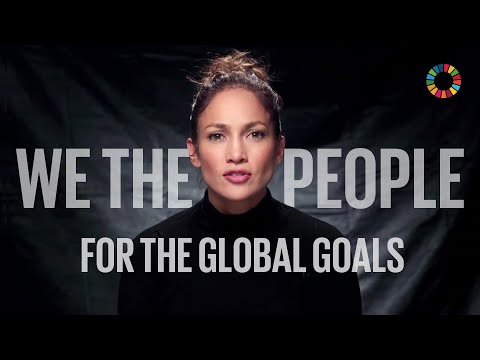
The SDGs are
a universal call to action to end poverty, protect the planet and ensure that
all people enjoy peace and prosperity. The SDGs were carefully selected through
a deliberative process and arguably the largest consultative programme of the
UN; involving 193 Member States, as well as global civil society. The goals are
contained in paragraph 54 of United Nations Resolution A/RES/70/1 of 25
September 2015. The Resolution is a broader intergovernmental agreement that
while acting as the Post 2015 Development Agenda (successor to the MDGs),
builds on the principles agreed upon under Resolution A/RES/66/288, popularly
known as The Future We Want. The seventeen goals include:
1. End poverty in all its forms everywhere
2. End hunger, achieve food security and
improved nutrition, and promote sustainable agriculture Project
3. Ensure healthy lives and promote wellbeing
for all at all ages
4. Ensure inclusive and equitable quality
education and promote lifelong learning opportunities for all
5. Achieve gender equality and empower all
women and girls
6. Ensure availability and sustainable
management of water and sanitation for all
7. Ensure access to affordable, reliable,
sustainable and modern energy for all
8. Promote sustained, inclusive and
sustainable economic growth, full and productive employment, and decent work
for all
9. Build resilient infrastructure, promote
inclusive and sustainable industrialisation, and foster innovation
10. Reduce inequality within and among
countries
11. Make cities and human settlements
inclusive, safe, resilient and sustainable
12. Ensure sustainable consumption and
production patterns
13. Take urgent action to combat climate
change and its impacts (taking note of agreements made by the UNFCCC forum)
14. Conserve and sustainably use the oceans,
seas and marine resources for sustainable development
15. Protect, restore and promote sustainable
use of terrestrial ecosystems, sustainably manage forests, combat
desertification and halt and reverse land degradation, and halt biodiversity
loss
16. Promote peaceful and inclusive societies
for sustainable development, provide access to justice for all and build
effective, accountable and inclusive institutions at all levels
17. Strengthen the means of implementation
and revitalise the global partnership for sustainable development
Within the goals are 169 targets. Targets under goal one,
for example, include reducing by at least half the number of people living in
poverty by 2030, and eradicating extreme poverty (people living on less than
$1.25 a day). Under goal five, there’s a target on eliminating violence against
women, while goal 16 has a target to promote the rule of law and equal access
to justice.
In effect, Agenda 2030 for sustainable development is an
all-inclusive agenda, which works in the spirit of partnership and pragmatism
to make the right choices now so as to improve life in a sustainable way, for
future generations. They provide clear guidelines and targets for all countries
to adopt in accordance with their own priorities and the environmental challenges
of the world at large.
References
United Nations,
Department of Economic and Social Affairs-sustainable development knowledge
platform
Resolution 55/2: United
Nations Millennium Declaration, NewYork 8th September 2000
From Stockholm To Rio: Some Ghanaian Responses To
The Problems Of The Environment [1993-1995] Vol Xix University Ghana Law
Journal 53—82 Sarpong G. A
The Info list-Earth Summit 2002
www.mapleleafweb.com - feature by Scott
Fogdon, September 1, 2002
SUSTAINABLE DEVELOPMENT – MAJOR INITIATIVES AFTER BRUNDTLAND
 Reviewed by Unknown
on
11:36
Rating:
Reviewed by Unknown
on
11:36
Rating:
Reviewed by Unknown
on
11:36
Rating:


No comments: